10.07.2026
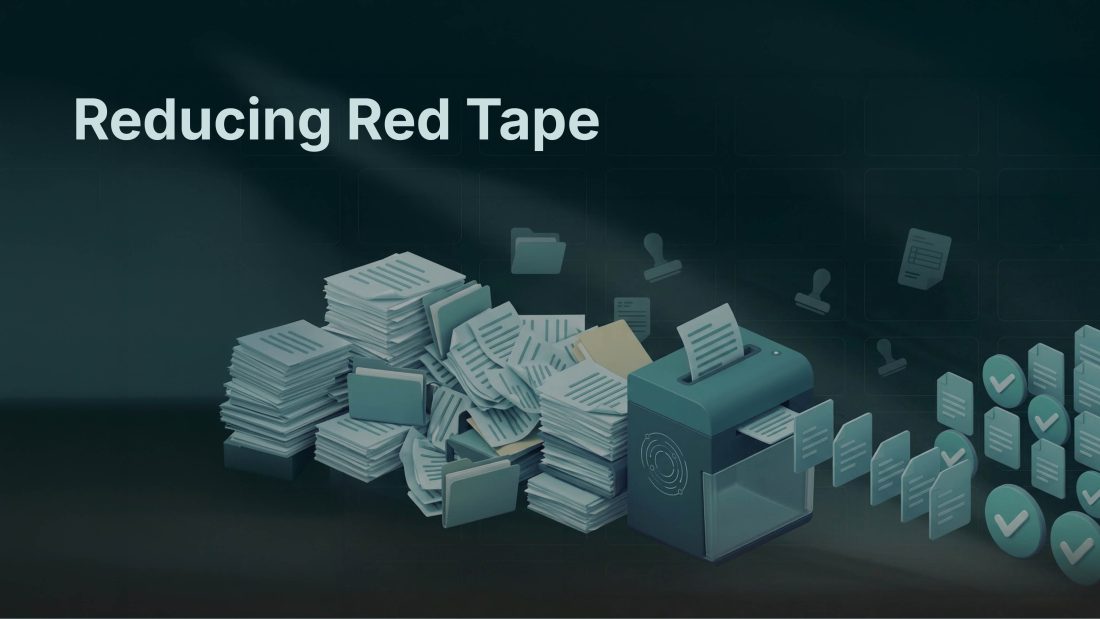
Bonn, 27 May 2026 – Mecklenburg-Western Pomerania and North Rhine-Westphalia have adopted specific legislative packages aimed at reducing red tape within the space of just a few weeks. This makes it clear that administrative modernisation is increasingly finding its way into the legislation of the federal states. Implementation is now the key task.
On 21 April 2026, Mecklenburg-Western Pomerania tabled a draft bill designed to simplify, speed up and further digitise administrative procedures. North Rhine-Westphalia will follow on 5 May 2026 with a comprehensive package of measures to ease the burden on citizens, local authorities and businesses. Both states are focusing on similar objectives: fewer requirements for written form, more digital communication, reduced documentation and reporting obligations, and faster procedures.
Mecklenburg-Western Pomerania intends, amongst other things, to replace the ‘written form’ with the ‘text form’ in many cases, to publish public notices online to a greater extent, and to deem permits automatically granted after a deadline has expired in appropriate cases. North Rhine-Westphalia plans, amongst other things, to abolish written-form requirements under state law as a matter of principle, to make digital communication the norm, and to significantly reduce reporting and documentation obligations for businesses.
From linqi’s perspective, these decisions point to a clear trend: The reduction of red tape is no longer merely a political pledge, but is increasingly being laid down in law. The crucial factor now is how this new scope will be utilised in practice. After all, laws initially merely create the framework.
“The political will to reduce red tape is evident. In practice, however, we hear time and again that there is a lack of solutions enabling public authorities, local councils and businesses to translate these requirements into functioning processes without adding further complexity. And that is precisely where linqi’s strength lies.” — Jörg Sager, CEO of linqi
No-code platforms such as linqi are becoming increasingly important as part of efforts to cut red tape. With linqi, administrative and business processes can be mapped digitally without having to set up every initiative as a traditional IT project. Forms, responsibilities, approvals, supporting documents and status information can be transferred into digital workflows that can be adapted to real-world processes. This bridges the gap between legislation and its implementation in day-to-day work.
“We see time and again in practice that reducing red tape does not end with a new legal regulation. It begins where simplifications are translated into concrete workflows. Information must be recorded unambiguously, responsibilities clearly assigned, processing statuses made transparent and decisions documented in a traceable manner. It is precisely this process logic that can be translated into digital workflows using linqi.” — Christian Korda, Head of Sales at linqi
The recent decisions taken in Mecklenburg-Western Pomerania and North Rhine-Westphalia therefore represent more than just individual reform measures. They demonstrate that the removal of bureaucratic hurdles is becoming a matter of practical implementation. For public authorities, local councils and businesses, this marks the start of the next phase: legal simplifications must be transformed into digital processes suitable for everyday use.
Would you like to know how linqi helps reduce red tape?
In 30 minutes, we’ll show you what’s possible using tailored real-world examples.
After a preliminary discussion of approx. 30 minutes, we will automate your process free of charge and demonstrate linqi to you using your own process in a live demo via video call (approx. 60 minutes) to clarify any open questions.
Request Live-Demo