10.07.2026
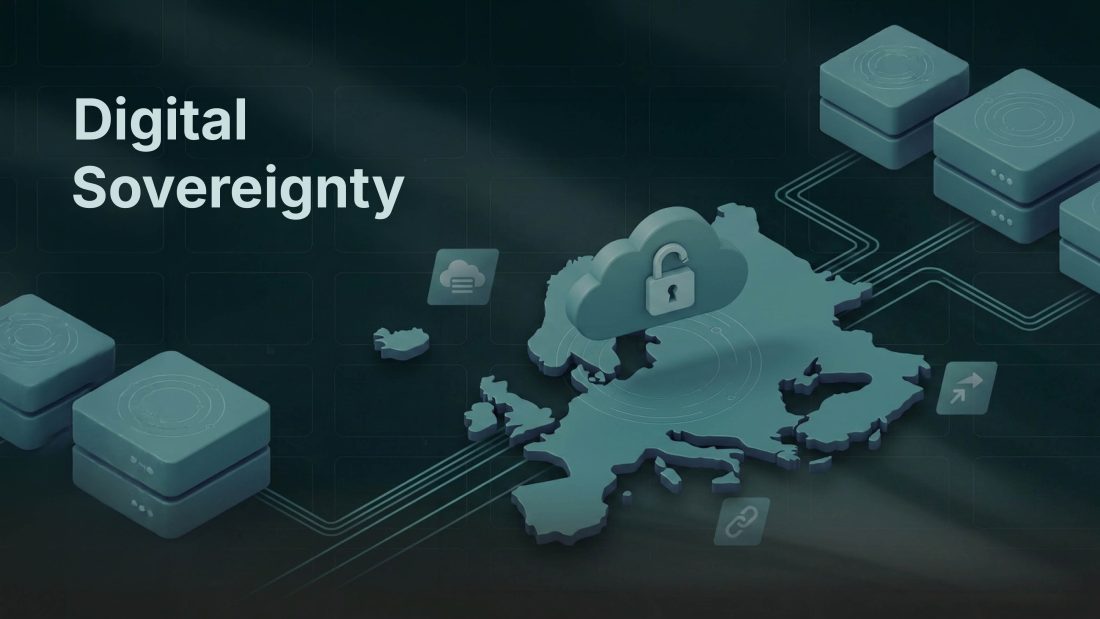
Bonn, 6 May 2026 – The German public sector is digitally dependent. This is shown by the Souveränitätsbarometer der öffentlichen IT (Public IT Sovereignty Barometer) – a study by next:public based on a survey of 266 IT managers from federal, state and local government bodies.
Anyone who works in a public authority knows that there are often months between the desire to digitise a process and its actual implementation. And in most cases, the same problem lies behind this: nothing works without external service providers. A new study confirms this with figures – and shows just how deep-rooted this dependency is.
The results are clear: 65 per cent of the IT managers surveyed rate their organisation’s dependence on international, non-European IT providers as high or very high. Among local authorities, the figure is as high as 70 per cent. Particularly affected are office software (81 per cent), operating systems (77 per cent) and collaboration tools (47 per cent) – in other words, precisely the tools used in day-to-day work.
At the same time, there is little scope to change this situation: only 4 to 5 per cent of public authorities are in a position to switch from existing IT solutions flexibly. The main reasons are technical complexity (70 per cent), a lack of alternatives (65 per cent) and proprietary interfaces (62 per cent) – in other words, technical connections between systems that only work with the respective provider and make a switch virtually impossible.
Behind the dependence on large software providers lies a structural problem: more than 40 per cent of public authorities are able to customise or help design less than 25 per cent of their own IT systems in-house. Anyone wishing to change or digitise a recurring procedure – a process carried out in the same way week after week – is reliant on external programmers. These programmers are expensive, often fully booked and, in turn, create new dependencies. If the service provider withdraws, the public authority is left with systems that no one in-house can maintain. 82 per cent of those surveyed see their digital sovereignty threatened by precisely this situation.
This leads to a vicious circle, which the study clearly identifies: tight budgets prevent the development of in-house expertise. A lack of expertise creates new dependencies. New dependencies cost money, which is then lacking for other purposes.
“The figures from the study come as no surprise to us. We’ve been hearing similar concerns for years from public administrations and authorities who know that something needs to change. Many have the will to make their processes more digital in their own way. What they lack are the right tools, so submitting a ticket to the in-house IT department or commissioning a service provider simply remains the usual route. It is only with a no-code solution like linqi that they immediately understand what is possible.” — Jörg Sager, CEO of linqi
82 per cent of the IT managers surveyed recommend standardised platforms that allow for customisation without external service providers. 70 per cent are calling for greater internal flexibility. This is precisely the approach that linqi has been pursuing for over a decade in companies, public authorities and corporations worldwide: a no-code process platform – in other words, software that enables specialist departments to digitise recurring processes themselves, without any programming knowledge, without external service providers and without delays. Developed and hosted in Germany, GDPR-compliant, ISO 27001-certified. Its customers include, amongst others, several state police forces and NATO.
“When we explain to public authorities that, in theory, even a trainee in a specialist department could digitise processes entirely independently using linqi – without any programming skills and without having to wait for IT support – we’re initially met with looks of disbelief. But that’s exactly what linqi makes possible.” — Christian Korda, Head of Sales at linqi
The full study, Souveränitätsbarometer der öffentlichen IT (Public IT Sovereignty Barometer), is available in german via next:public.
Would you like to know how linqi can give your public authority greater digital agility?
In 30 minutes, we’ll show you what’s possible using practical examples of your choice.
After a preliminary discussion of approx. 30 minutes, we will automate your process free of charge and demonstrate linqi to you using your own process in a live demo via video call (approx. 60 minutes) to clarify any open questions.
Request Live-Demo